A New England winter leaves more in a carpet than cold feet track in. From the first snow through the spring thaw, Hopkinton homes near Lake Maspenock, Hopkinton State Park and the town center absorb months of road salt, sand, mud and dry heated air, and most of it ends up on the floor. By the time the snowbanks along Route 85 and Route 135 finally melt, carpet in entryways, mudrooms and stairways usually looks and feels different than it did back in October.
Spring is the natural point to deal with it, but one vacuum pass will not undo a full winter. This guide covers what winter actually does to carpet fiber, the DIY steps that help the most once the thaw sets in, and when the job is better handed to someone with a portable extraction machine, like the carpet cleaning crew that serves Hopkinton.
What a New England Winter Leaves Behind in Carpet
Towns across Massachusetts, Hopkinton included, salt and sand the roads and sidewalks from the first ice through late March. Every trip outside and back in tracks a little of that onto the carpet near the door, and it keeps building for months because nobody is pulling up the carpet to shake it out in January.
At the same time, the furnace runs for months with the windows shut, which dries out the air and the carpet fibers along with it. Dry fibers hold more static and shed more dust, and anything that was already in the pile, pet dander, dropped food, regular dirt, has nowhere to go until the house opens back up in spring. Near the lake and the state park trails, the spring thaw adds its own layer of damp mud on top of all of it.
Start at the Door: Mats, Shoes and the First Vacuum Pass
The cheapest fix is also the most effective one: a heavy-duty mat outside the door and another just inside it, plus a shoes-off habit at the entry, catch most of what would otherwise reach the carpet. It sounds basic, but it is the difference between wiping boots on a mat and grinding salt and sand straight into the pile.
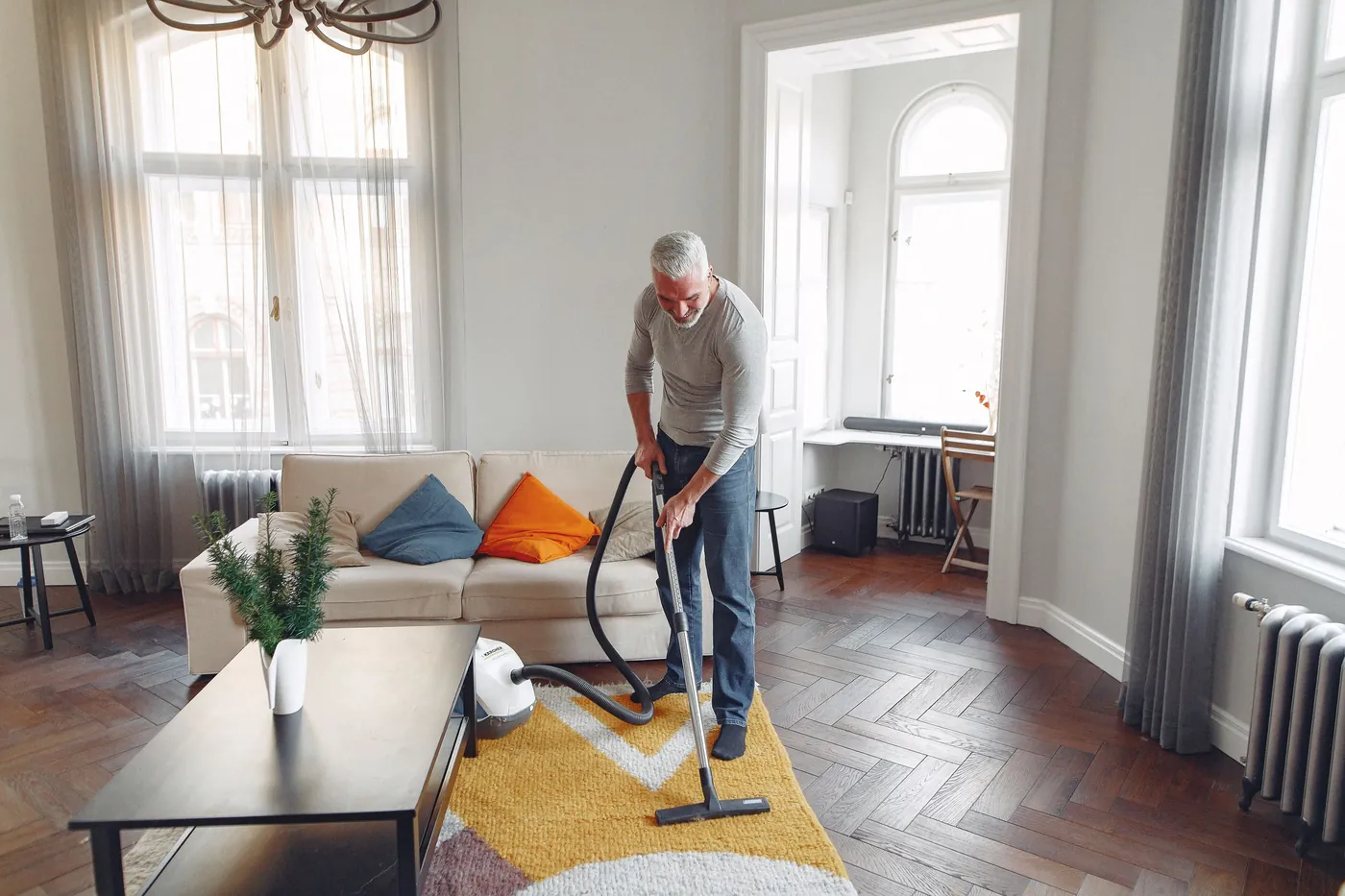
For the carpet itself, go slow. A quick pass in one direction barely lifts what settled over the winter. Vacuum each room in two directions, use a crevice tool right along the base of doors, closets and stair edges where grit collects, and do this before any water or cleaner touches the carpet. Wetting carpet that still has sand and salt in it just turns that grit into a muddy paste that works deeper into the fibers.
Treating Salt and De-Icer Marks Without Making Them Worse
A dull, whitish haze or a slightly stiff patch near an entryway is almost always leftover road salt or de-icer. Blot it with a cloth dampened in cool water, working from the outside of the mark inward, then blot dry with a clean towel. Avoid hot water and heavy scrubbing, since heat can set the residue and scrubbing pushes it deeper into the backing instead of lifting it out.
One frustrating thing about salt is that a spot which looked clean can turn hazy again a day or two later as the carpet finishes drying, because any salt left in the lower fibers works its way back to the surface. If a mark keeps reappearing after two or three careful attempts, that usually means the salt has gone past what a cloth and cool water can reach, and the whole area needs a real extraction rather than another spot treatment.
Why Entry Paths and Stairs Take the Worst of It
In most Hopkinton homes, the staircase and the hallway right off the entry form a direct line from the front door to the bedrooms, so they carry the same wave of winter grit as the entryway, just squeezed into a narrower stretch of carpet. Run the vacuum along the edge of each tread, not just down the middle, since loose sand and salt tend to settle where the tread meets the riser.
This is also where a full winter shows up fastest once the weather warms. A path that gets walked every single day in boots for five months often looks noticeably duller than a bedroom that saw far less traffic, even if both rooms are the same age and the same carpet.
Why Spring Is the Right Time for a Deeper Reset
Mud season adds one more layer of dirt before things dry out for good, so most Hopkinton homeowners wait until yards and trails around town firm up before scheduling a deeper cleaning. Doing it too early just means tracking in another round of mud right after the carpet is clean.
A full extraction reaches what a vacuum cannot: salt and grit worked down into the carpet backing, months of dust that built up while the windows stayed shut, and some of the stale closed-house smell that lingers after a long winter indoors. A low-moisture method is worth asking about here, since it puts less water into the carpet than a soak-and-rinse approach and tends to dry faster, so the room is back in use sooner. For a closer look at how the two methods compare, see our guide to low-moisture versus steam carpet cleaning.
When a Professional Cleaning Makes More Sense Than Another DIY Round
Call in a professional when an entry path or staircase still looks gray and dull after repeated vacuuming, when a room that stayed closed all winter has a musty smell that airing it out does not fix, when a salt mark keeps resurfacing after you have blotted it more than once, or when a pet had accidents during the months the yard was too icy or muddy for regular walks.
Belmax Cleaning serves Hopkinton with a portable extraction machine and the same low-moisture dry method described above. Carpet cleaning starts at $50 per room, stairs are $6 per step, larger open areas run $0.40 per square foot over 300 square feet, and there is a $120 minimum per visit, with the final price confirmed with you before any work starts. See the full breakdown on our pricing page. If an area does not meet your expectations once we are done, we come back and reclean it at no cost, though we will always be upfront if a stain is unlikely to come out completely. When you are ready, you can book your spring cleaning online in a couple of minutes.
Frequently asked questions
Why does carpet near my front door look dull or white after winter in Hopkinton?
That hazy look is usually leftover road salt or de-icer that was tracked in on boots and worked into the fibers over the season. Blotting with cool water helps, but salt left deep in the pile can resurface as the carpet dries, so entryway carpet often needs more than one treatment.
Can vacuuming alone get rid of winter sand and salt in carpet?
Vacuuming removes a lot of the loose grit sitting near the surface, especially with slow passes in two directions and a crevice tool along edges and doorways. It does not pull out what has already worked down into the backing, which is why heavily used entry paths and stairs usually need a real extraction cleaning at least once a year.
What is the best time to schedule a spring carpet cleaning in Hopkinton?
Most homeowners wait until mud season eases and yards and trails around town have firmed up, usually by late spring, so freshly cleaned carpet does not get tracked up again right away.
Will baking soda or vinegar fix winter stains on carpet?
Baking soda can help with mild surface odor, and vinegar diluted in water can lift some light residue, but neither removes salt or sand that has worked deep into the pile, or a stain that has already set. For anything beyond a light surface refresh, a professional extraction gets a more complete result.
How much does a spring carpet cleaning cost with Belmax in Hopkinton?
Carpet cleaning starts at $50 per room, stairs are $6 per step, and larger open areas run $0.40 per square foot over 300 square feet. There is a $120 minimum per visit, and the final price is confirmed with you before any work begins.
Related services
Serving