A couch takes more daily abuse than almost anything else in the house: kids, pets, snacks, sweaty summer afternoons and the occasional spilled glass of wine. The good news is that a lot of routine care can be done at home. The bad news is that the most common way people ruin a couch is by cleaning it, usually with too much water or the wrong product.
This guide walks through what actually works at home, step by step, and what to avoid. It also covers the point where a DIY job starts doing more harm than good, so you know when it makes sense to bring in a professional instead of scrubbing harder.
Step 1: Find and read the cleaning code
Before anything touches the fabric, look for the care tag. It is usually under the seat cushions, on the underside of the frame or on the deck of the couch. Most upholstered furniture carries a cleaning code, and that single letter tells you what the fabric can handle.
W means water-based cleaners are safe. S means solvent-based cleaners only (dry-clean style products), so water can stain or damage it. WS or SW means either water-based or solvent-based cleaners can be used. X means vacuum or light brushing only: no water and no solvents at all. If there is no tag, treat the couch as delicate and test everything first.
Step 2: Vacuum thoroughly before anything wet
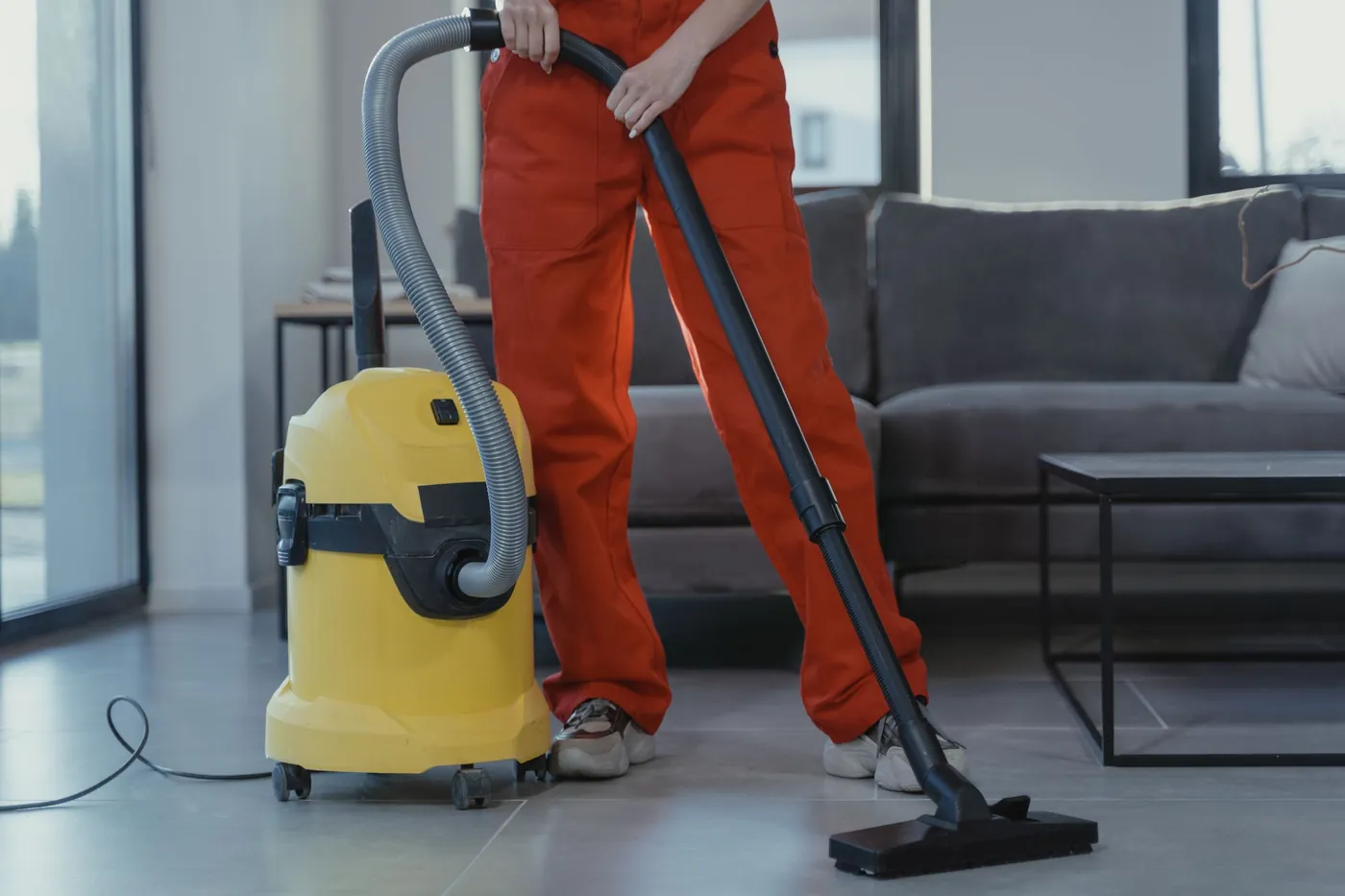
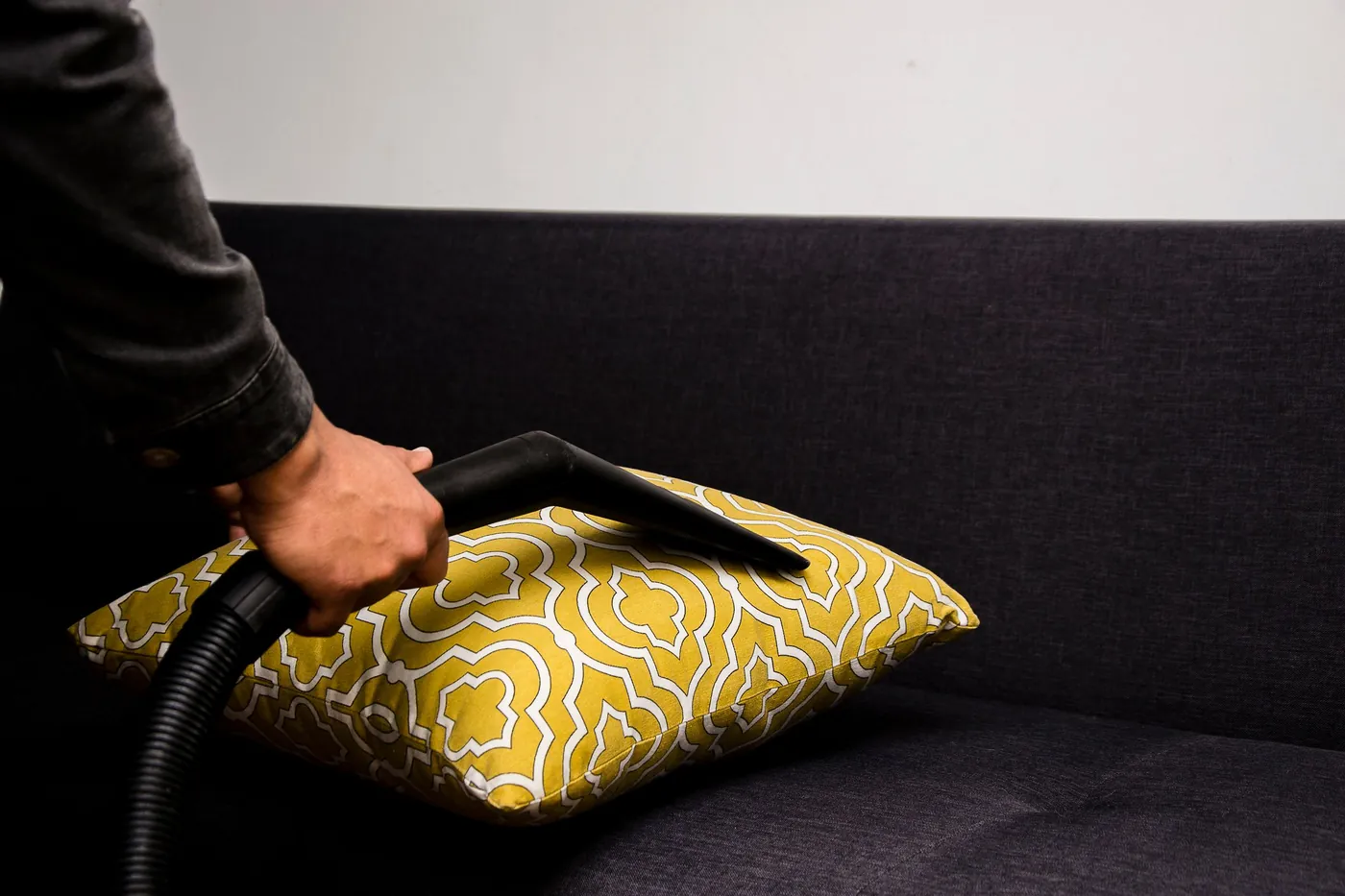
Dry soil is the first thing to remove. Take the cushions off and vacuum the seat deck, the crevices, the arms and the back with an upholstery attachment, then vacuum both sides of each cushion. Use a crevice tool along the seams, where crumbs and grit settle.
This matters more than it sounds. Wetting a couch that still has dust and grit in it turns that dirt into muddy residue that spreads and settles deeper into the fabric. Vacuuming once a week is also the easiest way to slow down the dull, grayish look that builds up on heavily used seats.
Step 3: Treat fresh spills the right way
Speed and restraint are what save a fabric. Blot a fresh spill right away with a clean white cloth or paper towel, pressing straight down to lift the liquid. Do not rub or scrub, because that pushes the stain deeper and can fuzz or distort the fibers. Work from the outside of the spot toward the center so it does not spread.
If the code allows water (W or WS), dampen the cloth lightly with plain water or a small amount of mild dish soap mixed in water, blot, then blot again with a dry cloth. Always test first on a hidden area, such as the back or the underside of a cushion, and wait for it to dry to check for color change. For S fabrics, use only a solvent-based upholstery spot cleaner made for that purpose, and follow its label.
Why too much water is the biggest risk
Upholstery is not like a T-shirt. Under the fabric there is foam, batting and a wooden frame, and all of it holds moisture. When a cushion gets soaked, the water spreads outward, picks up dirt and dye as it travels, and dries at the edges as a brown ring or water mark that is often worse than the original stain.
Too much water can also make some fabrics shrink, pucker or bleed color, and moisture trapped deep in the cushion dries slowly and can leave a musty smell. That is why the rule at home is always the same: light moisture, lots of blotting and good airflow while it dries.
Removable covers, pet hair and odors
Zippers on cushion covers are often there to help the cushion fit, not as an invitation to wash them. Many manufacturers and fabric experts advise against putting cushion covers in the washing machine, because they can shrink, fade or come back misshapen and never fit the foam again. If you are unsure, check the care label inside the cover, and when in doubt, leave it on the cushion.
For pet hair, a rubber glove or a slightly damp rubber squeegee dragged across the fabric pulls hair into clumps that are easy to vacuum up. A lint roller works for the arms and back. For general odors, sprinkle baking soda lightly over a dry couch, let it sit for a few hours or overnight, and vacuum it up completely. Baking soda helps with surface smells, but it will not fix urine that has soaked into the cushion.
What not to do
Skip the bleach and harsh household cleaners, which can strip color and weaken fibers. Avoid soaking or saturating cushions, and never pull the foam out to wash it. Be careful with store-bought or rental machines too: they tend to put down a lot of water and leave soap behind, and that sticky residue attracts dirt so the couch gets dirty again faster. Do not use a hair dryer or heater up close to speed up drying, since heat can set stains and damage some fabrics.
Finally, do not keep going at the same stain over and over. If a spot has not improved after a careful blot or two, each extra round raises the chance of a ring, a faded patch or a rough texture.
When it is time to call a professional
Some jobs are simply not good DIY projects. Call a pro when the stains are old or have already been treated with products, when the whole couch looks dingy rather than one spot, when there is pet urine in the cushions, when the fabric is delicate (velvet, silk blends, linen) or when the tag says S or X. You can see what an upholstery cleaning visit covers before deciding.
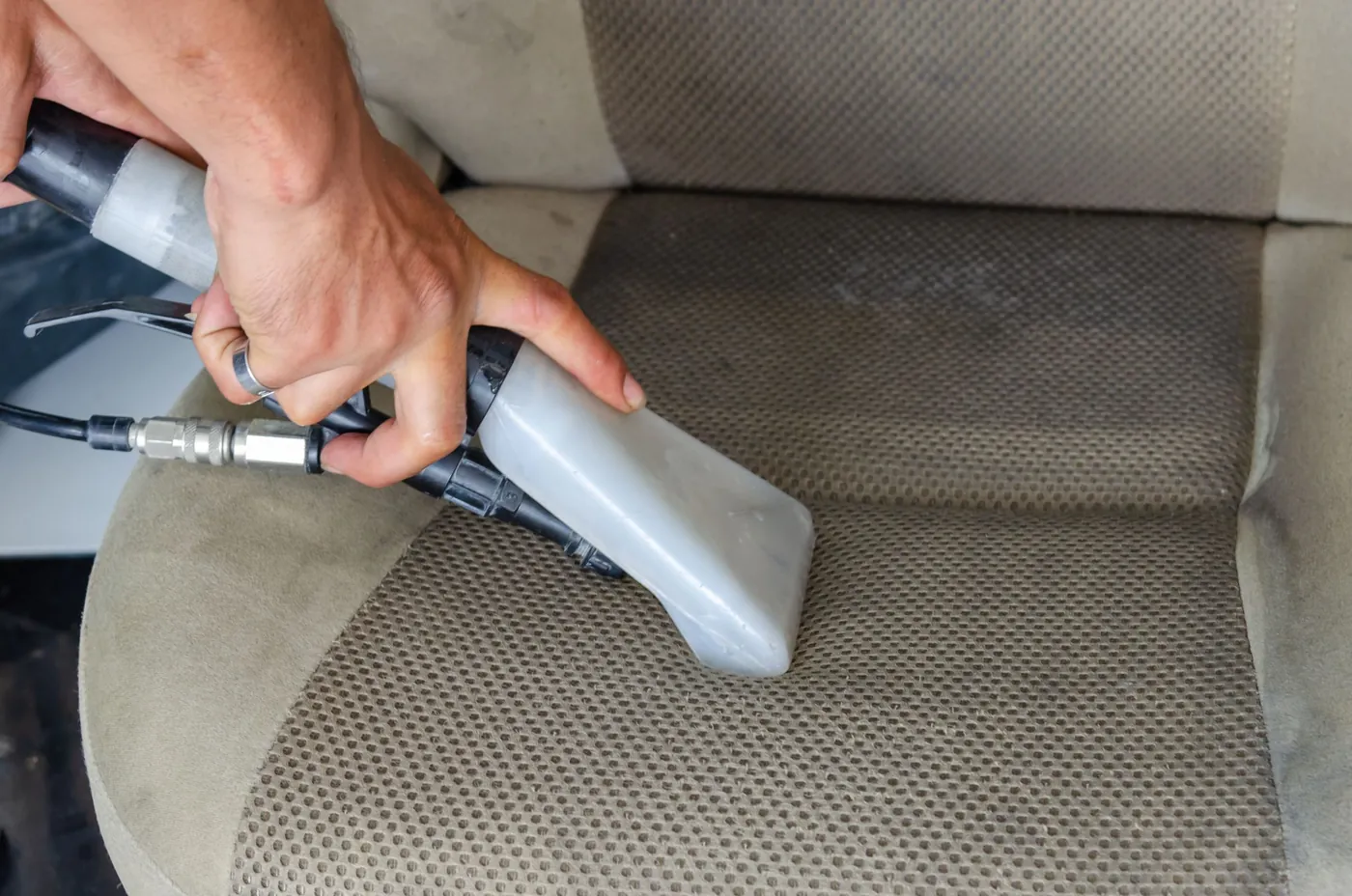
At Belmax Cleaning, Weliton and Ritha clean couches in homes from Uxbridge to Worcester with a portable extraction machine and a low-moisture method, so the fabric is cleaned without being soaked. Pricing goes by size: a 2-seat sofa starts at $120, a 3-seat at $165, sectionals at $55 per section and an armchair at $75, with a $120 minimum per visit. The full list is on our pricing page, and the final price is confirmed with you before we start. For a broader look at what to budget, read our guide to couch cleaning cost.
If you are not happy with the result, we come back and redo it at no cost. We are honest about stains, though: some are permanent, so complete removal is never guaranteed. When you are ready, you can book your couch cleaning online in a couple of minutes.
Frequently asked questions
What do the W, S, WS and X codes on a couch tag mean?
W means water-based cleaners are safe. S means solvent-based cleaners only, so water should be avoided. WS or SW means either type can be used. X means the fabric should only be vacuumed or lightly brushed, with no water or solvents.
Can I put my couch cushion covers in the washing machine?
Usually it is not a good idea. Many manufacturers advise against machine washing cushion covers because they can shrink, fade or lose their shape and no longer fit the foam. Check the care label inside the cover first, and if there is no clear washing instruction, leave the cover on.
Why did a water ring appear after I cleaned a spot on my couch?
Water rings form when too much moisture spreads through the fabric and padding, carrying dirt and dye to the edges where it dries. Using less water, blotting instead of scrubbing and drying the area quickly help prevent it. Rings on S-code fabrics are common because those fabrics should not be cleaned with water at all.
How do I get rid of odors on a fabric couch?
For general surface odors, vacuum the couch, sprinkle baking soda lightly over the dry fabric, let it sit for a few hours or overnight and vacuum it up thoroughly. This helps with everyday smells. Pet urine that has soaked into the cushions usually needs professional cleaning, and even then complete odor removal is not always possible.
How much does it cost to have a couch professionally cleaned by Belmax?
Belmax Cleaning prices upholstery by size: a 2-seat sofa starts at $120, a 3-seat sofa at $165, sectionals are $55 per section and an armchair is $75. There is a $120 minimum per visit. The final price depends on size, fabric and condition and is confirmed before any work starts.
Related services
Serving