You spend roughly a third of your life on your mattress, yet it is the one piece of furniture most people never clean. Sweat, skin flakes, dust, spills and the occasional accident all end up in the top layers, and unlike sheets, a mattress cannot go in the washer.
The good news is that most of the routine care is easy and cheap to do yourself. The catch is moisture: a mattress is thick, and water that sinks deep into the foam or padding can take a long time to dry, which is how odors and mildew start. Below is a safe at-home routine, how to handle fresh stains, what not to do, and the situations where a professional cleaning is worth the money.
A Safe At-Home Mattress Cleaning Routine
Start by stripping the bed and washing everything that comes off it: sheets, pillowcases, the mattress pad and the protector if you have one. Follow the care labels and use the warmest water the fabric allows. Clean bedding is half the battle, because it is what touches your skin every night.
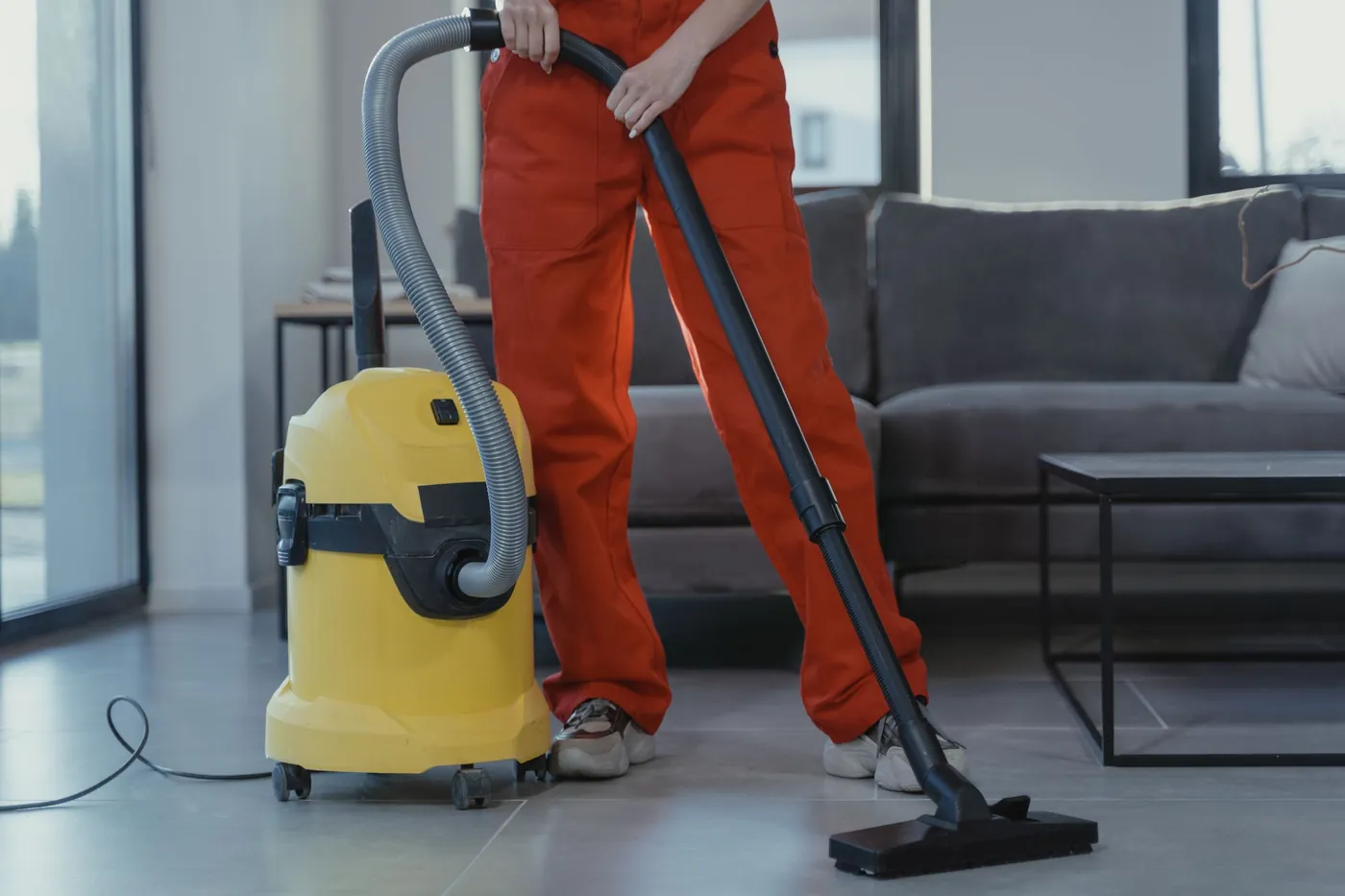
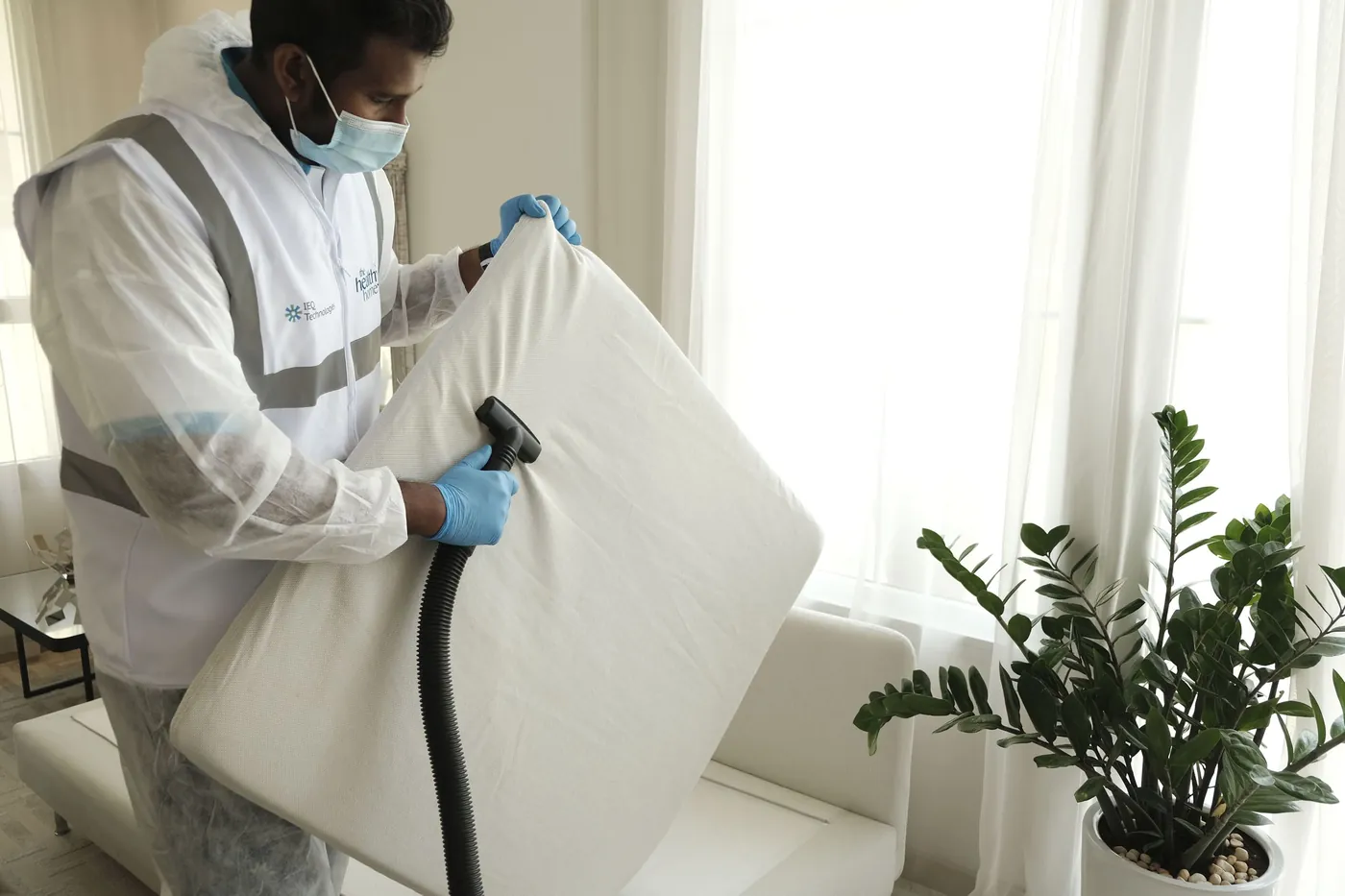
Next, vacuum the whole mattress with the upholstery attachment. Go slowly in overlapping rows across the top, the sides and the seams, where dust and debris collect. If your vacuum has a crevice tool, run it along the piping and around any tufts or buttons.
For a fresh smell, sprinkle a thin, even layer of baking soda over the surface, let it sit for several hours (longer is fine if you can leave the bed stripped for the day), then vacuum it up thoroughly. Open the windows or run a fan while it sits so the room gets some air. On a dry, sunny day, letting sunlight into the room helps the mattress air out too.
Finally, put a washable mattress protector on before you remake the bed. It is the single best thing you can do to keep the mattress itself clean, because it catches sweat and spills before they reach the padding.
How to Treat Fresh Stains Without Soaking the Mattress
Speed matters more than any product. The moment something spills, blot (do not rub) with a clean, dry towel to pull up as much liquid as you can. Press firmly and switch to a dry section of the towel as it gets wet.
For sweat marks and general body soil, mix a small amount of mild dish soap into cool water, dampen a cloth (wrung out until it is barely wet) and dab the area. Then blot with a second cloth dampened with plain water, and finish by pressing with a dry towel. The goal is always a damp cloth on the surface, never liquid poured onto the mattress.
For blood, use cold water only. Warm or hot water can set the stain. Dab with a cold, damp cloth, blot dry, and repeat patiently. For a child or pet accident, blot up every bit you can first, then work with a lightly dampened cloth and blot dry again. Urine that has soaked in deeply is hard to fully reach at home, which is one of the most common reasons people call us.
After any spot treatment, let the area dry completely before you put the sheets back on. A fan pointed at the spot speeds things up. Test any cleaner on a hidden area first, and check the care tag for guidance from the manufacturer.
What Not to Do
Do not soak the mattress. Spraying it heavily or pouring cleaner on a stain pushes moisture deep inside, where it can sit for days and lead to musty odors or mildew.
Do not mix cleaning products, and do not use bleach. Mixing chemicals can create harmful fumes, and bleach can discolor the fabric and weaken fibers.
Do not use a hot hair dryer or a heater up close to dry a spot. High heat can damage some foams and fabrics and can set protein stains like blood. Do not reach for a rented or store-bought steamer without knowing how much moisture and heat it puts out. Too much steam or water on a mattress causes the exact moisture problem you are trying to avoid.
Check the Tag and the Warranty Before You Clean
Before you try anything beyond vacuuming, read the label and the warranty that came with your mattress. Many manufacturers and retailers state that stains can void the warranty, and some will not accept a stained mattress for a warranty claim at all, even if the defect has nothing to do with the stain.
That is the strongest argument for a protector from day one. It keeps the mattress clean and helps protect your warranty coverage. If your mattress already has stains and you are thinking about a claim, check the specific terms with the manufacturer first.
When a Professional Mattress Cleaning Is Worth It
Home care handles the routine. A professional cleaning makes sense when the problem goes deeper than the surface: old stains that did not come out with blotting, a smell that baking soda will not fix, after someone has been sick in bed, after a child or pet accident that soaked in, when you are moving in or out, or when a guest bed has sat unused for a long time.
It is also smart to clean the mattress at the same visit as other furniture. Many of our customers book it alongside a sofa or carpet cleaning, which we cover in our guide on how to clean a couch.
An honest note: professional cleaning removes a lot of surface dust and debris and can lift many stains and odors, but some stains are permanent, especially old ones or those that have reached deep layers. We will tell you what to expect before we start.
What Belmax Does and What It Costs
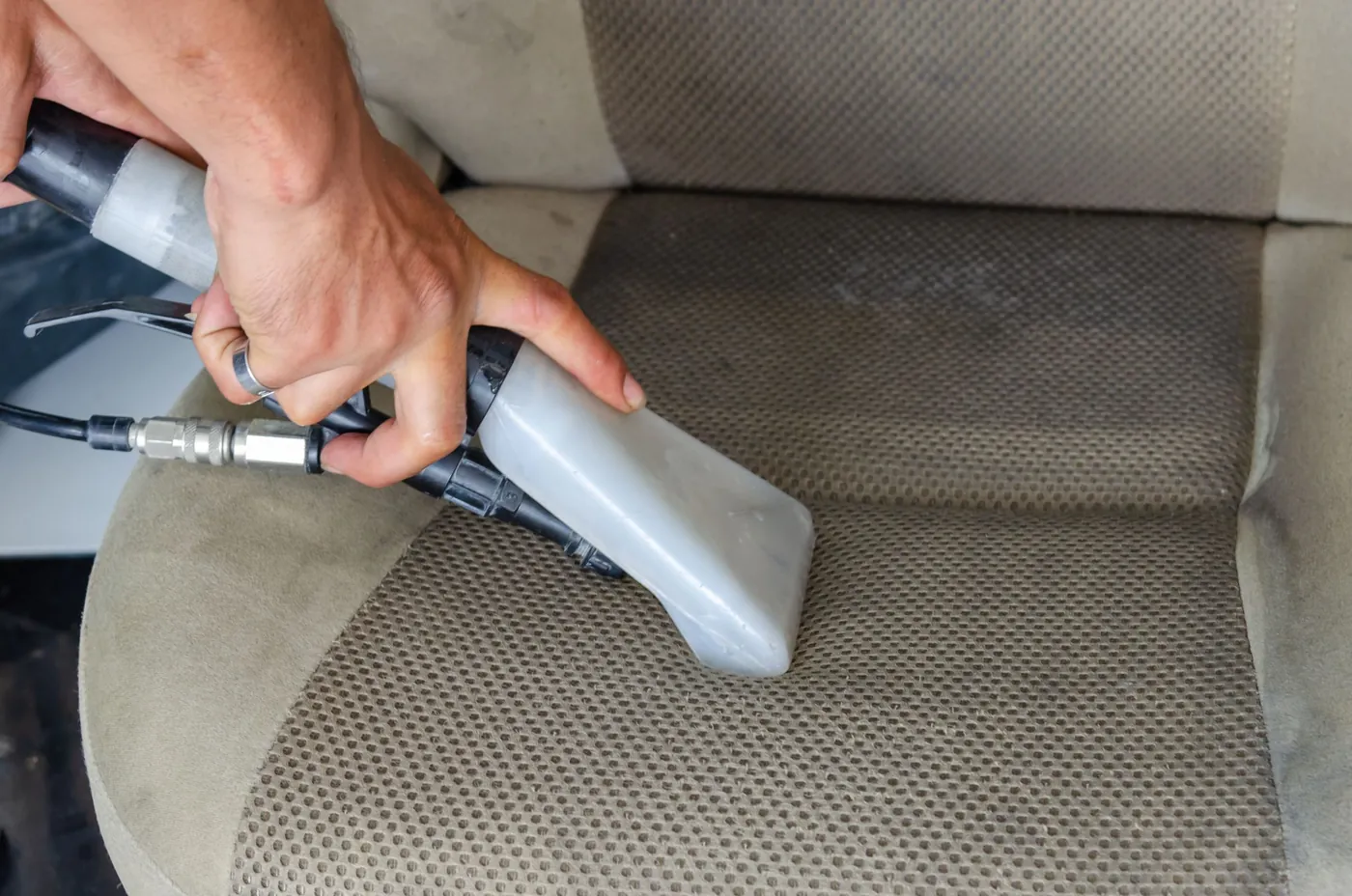
Belmax Cleaning is run by Weliton and Ritha, a husband-and-wife team based in Uxbridge who serve the Blackstone Valley, the Worcester area and MetroWest. For mattress cleaning, we use a portable extraction machine with a low-moisture approach, so the mattress gets a deep clean without being soaked. Drying time depends on the mattress, the room and the airflow, so we will give you tips for your space.
Our mattress prices start at $90 for a Twin, $110 for a Full, $130 for a Queen and $150 for a King. Heavy stains or pet urine and odor treatment can add to the price. Each visit has a $120 minimum, which is why many people combine a mattress with a sofa or a few rooms of carpet. The final price is confirmed with you before we begin. See the full list on our pricing page.
If you are not happy with the result, we come back and redo it at no cost. Payment is by Zelle, Venmo, check or cash. When you are ready, you can book your mattress cleaning online in a couple of minutes, or call or text us.
Frequently asked questions
How often should I clean my mattress?
Washing bedding weekly and vacuuming the mattress every month or two keeps it in good shape for most households. A deeper professional cleaning once or twice a year is a reasonable rhythm, or sooner after spills, illness or accidents.
Can I use a steam cleaner on my mattress?
It is risky without control over how much moisture and heat the machine puts out. Too much steam or water can sink into the padding and lead to odors or mildew, and heat can damage some materials. If you are unsure, stick to vacuuming and light spot cleaning.
How do I get urine out of a mattress?
Blot up as much as you can right away with dry towels, then dab with a lightly dampened cloth and blot dry again, without soaking the mattress. Urine that has soaked deep into the foam is hard to reach at home, so a professional cleaning with an odor treatment is often the better option for older accidents.
Can stains void my mattress warranty?
Often, yes. Many manufacturers and retailers say stains can void the warranty or block a claim, even when the defect is unrelated. Read your warranty terms, and use a mattress protector from the first night to help keep coverage.
How much does professional mattress cleaning cost with Belmax Cleaning?
Belmax Cleaning charges starting at $90 for a Twin, $110 for a Full, $130 for a Queen and $150 for a King, with a $120 minimum per visit. Heavy stains or pet urine treatment may add to the price, and the final price is confirmed before work begins.
Related services
Serving